Sliding Scale
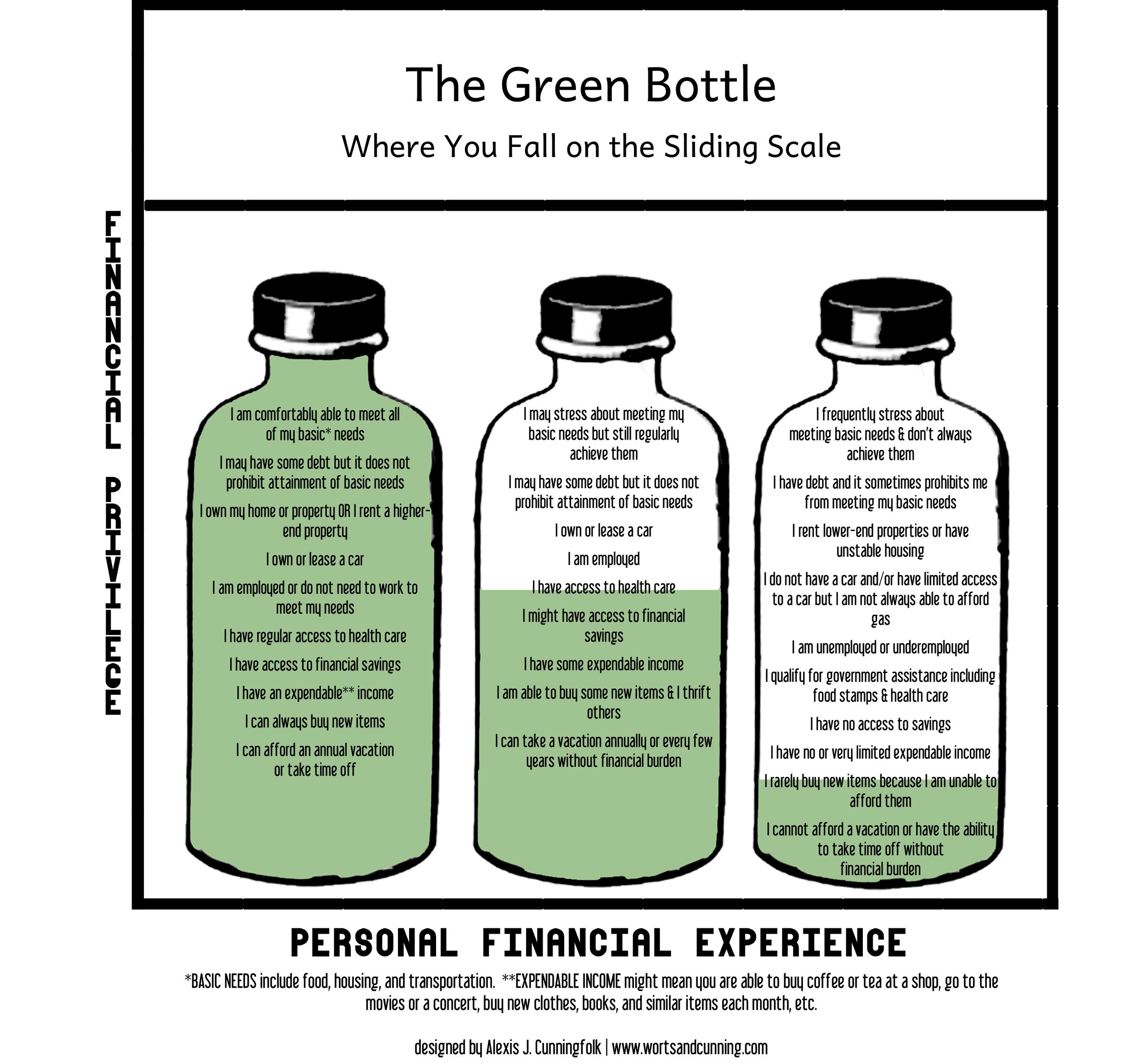
Much gratitude to Alexis J Cunningfolk for their thoughts on sliding scale offerings www.wortsandcunning.com and to Hammerstone School for some of their sliding scale wording.
About My Sliding Scale
Shameless Sexuality serves a lot of marginalized populations, and I am proud to be able to offer services to those communities, in part because I belong to some of them too! I know fixed prices can limit access for those who could benefit most, so I offer a sliding scale for sessions.
A sliding scale lets people with different financial means access services while keeping my work sustainable. Its purpose is economic justice: when everyone engages thoughtfully, each person contributes a similar percentage of their resources.
I structure my sliding scale so that the upper tiers of the scale subsidize the lower tiers.
The true cost of a session class falls near the middle of the scale and reflects fair wages, insurance, supplies, facilities, software, and continuing education. Paying according to one's resources creates a more equitable, diverse, and sustainable community.
How to Decide How Much to Pay
A sliding scale requires honest and thoughtful consideration of the complexities of income, wealth, class, race, and other forms of inequity that affect an individual's ability to pay.
Consider paying less on the scale if you…
• have significant debt
• have significant medical expenses
• have educational expenses
• receive public assistance
• have immigration-related expenses
• are a senior citizen with a fixed income
• are supporting children or have dependents
Consider paying more on the scale if you…
• own the home you live in
• have investments, retirement accounts, or inherited money
• travel recreationally
• have access to family resources in times of need
• share most of your expenses with a partner
• work part time by choice
Considering Sacrifice vs Hardship
Please also consider the idea of "sacrifice" versus "hardship" when choosing how much to pay.
Sacrifice
"If paying for a class, product, or service would be difficult, but not detrimental, it qualifies as a sacrifice. You might have to cut back on other spending in your life (such as going out to dinner, buying coffee, or a new outfit), but this will not have a long term harmful impact on your life. It is a sacred sacrifice in order to pursue something you are called to do." -Alexis J. Cunningfolk
Hardship
"If, however, paying for a class, product, or service would lead to a harmful impact on your life, such as not being able to put food on the table, pay rent, or pay for your transportation to get to work, then you are dealing with hardship. Folks coming from a space of hardship typically qualify for the lower end of the sliding scale." -Alexis J. Cunningfolk
My Sliding Scale
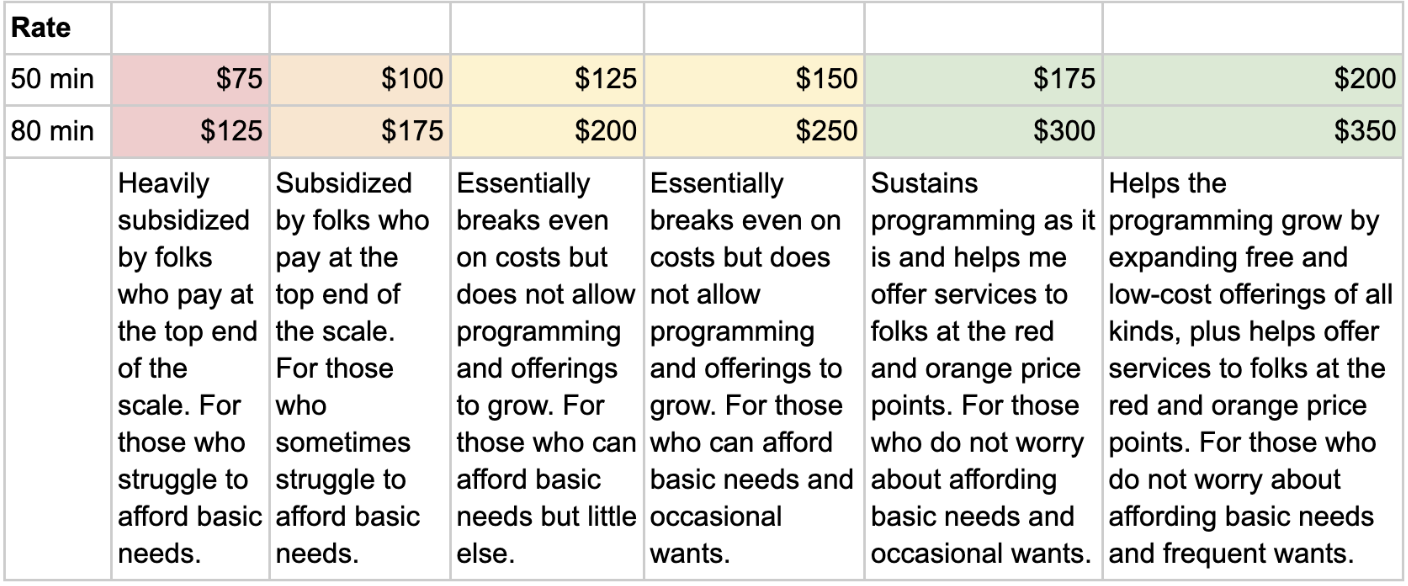
*For those who cannot afford $75 or more, please consider seeing one of my student therapists.